
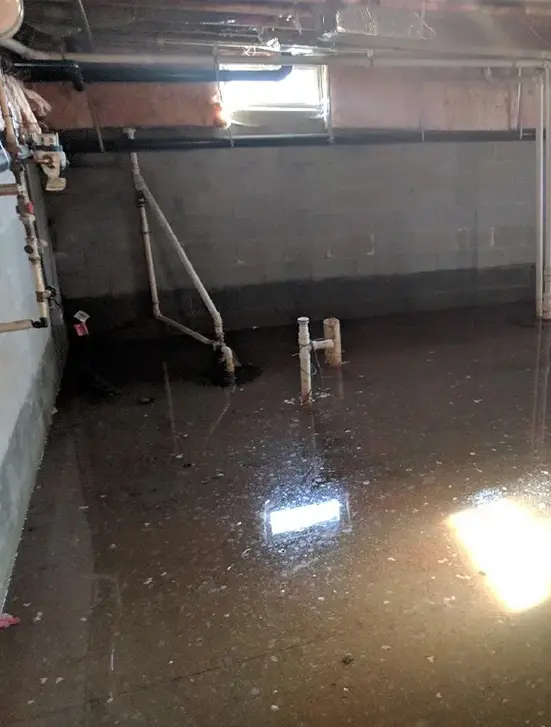
What causes water in my basement following heavy rain?
After a heavy rainstorm in Michigan, the basement can suddenly become a stressful situation.
You could observe water at the edge of the floor, dampness on a basement wall, a puddle close to the sump pump, or a musty odor which previously was not present. In other houses, the issue develops gradually and is shown by stains, paint that is flaking off, or persistent humidity rather than by obvious standing water.
No matter the symptom, if water has entered your basement it generally indicates moisture is finding a way into or around the foundation.
The first thing you need to do to decide how to deal with the water is understand its source.
1. Water is accumulating around the foundation.
One of the most common reasons basements become wet after a storm is simply that the soil surrounding the home becomes saturated.
As rainwater collects in the ground, pressure can build around basement walls and beneath the floor. Water naturally looks for areas where it can pass through.
That may include:
- Cracks in concrete
- Gaps around penetrations
- Wall and floor joints
- Weak points in masonry
- Openings around basement windows
If your basement repeatedly becomes wet during or shortly after heavy rainfall, the water around the foundation should be considered during the inspection.
People with persistent moisture can find information on professional basement waterproofing solutions designed to handle water before it damages the basement.
2. The gutters or downspouts are directing water towards the house.
Not every basement water problem begins underground.
Gutters and downspouts play a major role in carrying rainwater away from the roof. If they are clogged, damaged, disconnected, or discharge water too close to the foundation, water can gather outside the house.
Over time, this can contribute to saturated soil around basement walls.
After heavy rain, walk around your property and look for:
- Overflowing gutters
- Downspouts ending directly beside the foundation
- Standing water near the home
- Areas of soil erosion
- Water flowing toward the house instead of away from it
Improving exterior drainage may reduce the water reaching the foundation, but an existing basement water problem may still need additional repairs.
3. The foundation is cracking and this is letting water in.
Cracks can develop in concrete and masonry foundations for a number of reasons.
Some cracks remain small. Others may allow water through or show signs of movement that should be examined more closely.
If you notice water entering directly through a visible crack, the crack itself should be inspected rather than simply covered with paint or sealant.
Warning signs that deserve additional attention include:
- Cracks becoming larger over time
- Horizontal cracks
- Multiple cracks developing in the same area
- Cracks accompanied by wall movement
- Water repeatedly entering through the same location
The page on Foundation Crack Repair gives more information regarding the reasons why cracks occur and how different kinds of foundation cracks might be dealt with.
4. Water is entering at the point where the wall meets the floor.
Another common location for basement moisture is the joint between the basement wall and concrete floor.
During heavy rainfall or high groundwater, moisture may appear along the basement perimeter rather than through the middle of a wall.
Homeowners may notice:
- A wet line around the basement floor
- Dampness appearing in several areas at once
- Water collecting around stored items
- Efflorescence or staining near the bottom of the wall
An interior drainage system may be a suitable solution when water regularly appears along the basement perimeter.
It is important to find out why the water appears there, not just address the visible puddle.
5. Your Sump Pump Cannot Keep Up
A sump pump is designed to collect and remove water before it reaches the basement floor.
But during prolonged or unusually heavy rain, problems with the pump or system can become obvious very quickly.
Possible issues include:
- Pump failure
- Loss of power
- Clogged components
- An undersized system
- Discharge problems
- A sump basin filling faster than the pump can remove water
If your sump pump runs constantly during storms or does not run when water enters the basin, it should be inspected.
Homeowners can learn more about Sump Pump Installation & Backup options for extra protection during heavy rainfall or power outages.
6. Exterior Drainage Is Not Carrying Water Away Properly
The land surrounding a home should generally help direct surface water away from the foundation.
Over time, soil can settle, or landscaping changes can create areas where water collects near the house.
Look for:
- Low spots beside the foundation
- Standing water
- Downhill slopes toward the home
- Settled patios or walkways
- Areas where runoff repeatedly collects
Making corrections to surface drainage can lessen the pressure placed on the waterproofing system and the foundation.
It is possible that simply improving the drainage will not cure an existing problem with water inside.
7. There May Be More Than One Source of Water
It isn’t always the case that basement dampness is due to one particular cause.
One homeowner could have a cracked foundation and bad exterior drainage, while another house might have groundwater pressure along with an aging sump pump.
That is why sealing the location where water appears does not always solve the underlying problem.
A proper inspection should consider:
- Where the water appears
- When it appears
- Foundation condition
- Drainage around the home
- Sump pump performance
- Basement humidity
- Previous repairs
- Signs of structural movement
The goal is to understand how water is reaching the basement before choosing a repair.
Can You Ignore a Little Basement Water?
It might appear that a bit of dampness is no big deal, especially if the water dries out quickly.
But recurring moisture deserves attention.
Over time, a wet basement can contribute to:
- Musty odors
- Mold-friendly conditions
- Damaged belongings
- Deteriorating finishes
- Increased humidity
- Continued water intrusion
Catching the problem early also gives homeowners more time to understand their options before the next major storm.
What Should You Do When You Find Water?
Begin by documenting what you see.
Take photographs and make notes of:
- Where the water entered
- How much water appeared
- Whether it happened during or after the rain
- Whether the sump pump was operating
- Any visible wall or floor cracks
If water continues returning, schedule an inspection before simply covering the affected area.
Foundation Solutions 360 offers free inspections to homeowners in Michigan who have issues with basement moisture, concerns about their foundation, and problems in the crawl space.
Our team can evaluate the conditions around your basement and explain which repairs may be appropriate for your home.
Keep Your Basement Dry
You shouldn’t come to expect recurring water in the basement every time it rains.
Learn more about our Basement Waterproofing and Wet Basement Repair services or schedule a free inspection to understand what is allowing water into your home.